
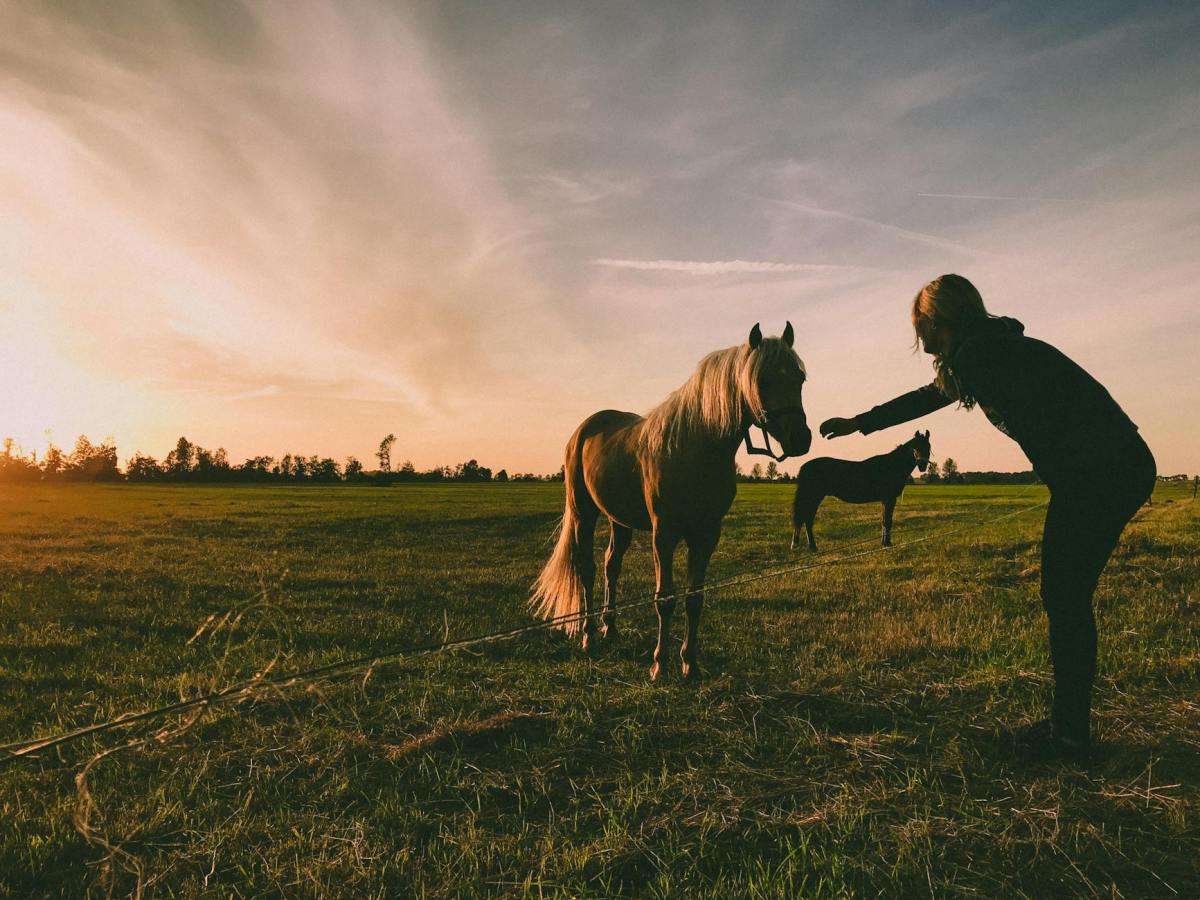
I work at a horse riding stable, and one of my favorite parts of the job is witnessing students transition into competent riders.
That often means they don’t need help cleaning their horses’ hooves or assistance with getting their horses to move faster than a walk. It becomes natural for them to know when to circle their horses to make space, recite horse anatomy and tack, and understand the basics of how they should ride and interact with horses, even if they mess up sometimes.
In my mind, my students are transitioning from simply being horse admirers to becoming true horse riders.
This transition isn’t just a joy for instructors, like myself, to witness. I notice the smiles on my students’ faces when they are able to feel independent and try harder activities during lessons.
But this next stage in riding development comes with its own challenges too. I have higher expectations for my students because I know that they know how they are supposed to ride. If their heels are up or their horses are crowding another horse, I will remind them of how they should be. As they perform harder assignments, I might point out more detailed things for them to work on than before.
Before, it was simply about getting their horses where they wanted them to go without falling off. Now, it’s about the refinement period. Making sure my riders not only ride confidently, but with intention and poise.
Even deeper than that, it’s about getting my riders to make the last transition. Not from students to jockeys or olympians. But from horse riders to horse lovers.
In order to be a horse lover, you must ultimately care more about your horse than about whether or not you successfully rode a pattern or cantered faster than your friends. You must know your horse so well, you can notice and understand their movements and expressions and fears. You must be willing to do what it takes to care for your horse, whether that means cleaning their stinky stall or giving your horse a break when they are tired.
If you’re a regular on my blog, you might be wondering why you just had to read all about becoming a horse lover when you don’t spend any time with horses. (Though if you are a fellow horse lover, big high-five!) But I promise, the process of becoming a horse lover is relevant to your life, even if you never get on a horse.
That’s because this process mirrors our spiritual journey with God.
Consider it this way:
We must first express interest in having a relationship with God and ask for His forgiveness. Then, we make a commitment, whether it be attending church or small group or Bible study, to grow in that faith. Even as we participate in Christian community, we are still baby Christians at this stage. We are often reliant on others to hold our hands through this process and help us understand a God we admire, but do not fully know for ourselves.
Through prayer, discipleship, and ultimately the work of the Holy Spirit, we transition into independent Christians. Community is still vital to our faith–it always will be–but perhaps we are doing some of the leading. We feel more comfortable reading the Bible on our own and bringing our thoughts to the table. We have a sound understanding of what it means to be a Christian and we are starting to know what God’s voice sounds like.
While this season is exciting, it comes with its own challenges. Our faith might be tested for the first time. We may have harder questions to grapple with. Sometimes we experience loneliness or isolation where we must rely on God fully. This is a season of preparation, though, for the beauty that is to come.
And this stage is what generally lasts the longest because we cannot enter the third stage until we are reunited with Jesus in Heaven. We can become more mature as we wait on the Lord by spending time with Him and becoming more like Him in word and deed.
But we cannot fully know or love Him until we have completed the process of sanctification. Another word for this is glorification, which means we have been brought to perfection in Christ.
So what does this mean for us today?
We must prepare for when we will be reunited with God again. We shouldn’t be obsessed over when exactly that will happen–that will just create fear in us. But we should spend this time getting to know God and allowing His love to influence our daily lives and decisions. Through this process, there is grace, for we can trust that even when we make mistakes, God’s love for us remains.
Therefore, since we have been justified through faith, we have peace with God through our Lord Jesus Christ, 2 through whom we have gained access by faith into this grace in which we now stand. And we boast in the hope of the glory of God. 3 Not only so, but we also glory in our sufferings, because we know that suffering produces perseverance; 4 perseverance, character; and character, hope. 5 And hope does not put us to shame, because God’s love has been poured out into our hearts through the Holy Spirit, who has been given to us.
Romans 5:1-5
Reflection Questions:
How might God be calling you to grow to become more like Him today?
What in your routine or relationships might need to change?
 The Will to Wake Up